Child Hurt at School? Here’s What to Do
Author(s): Chris Lazaris
September 28, 2026
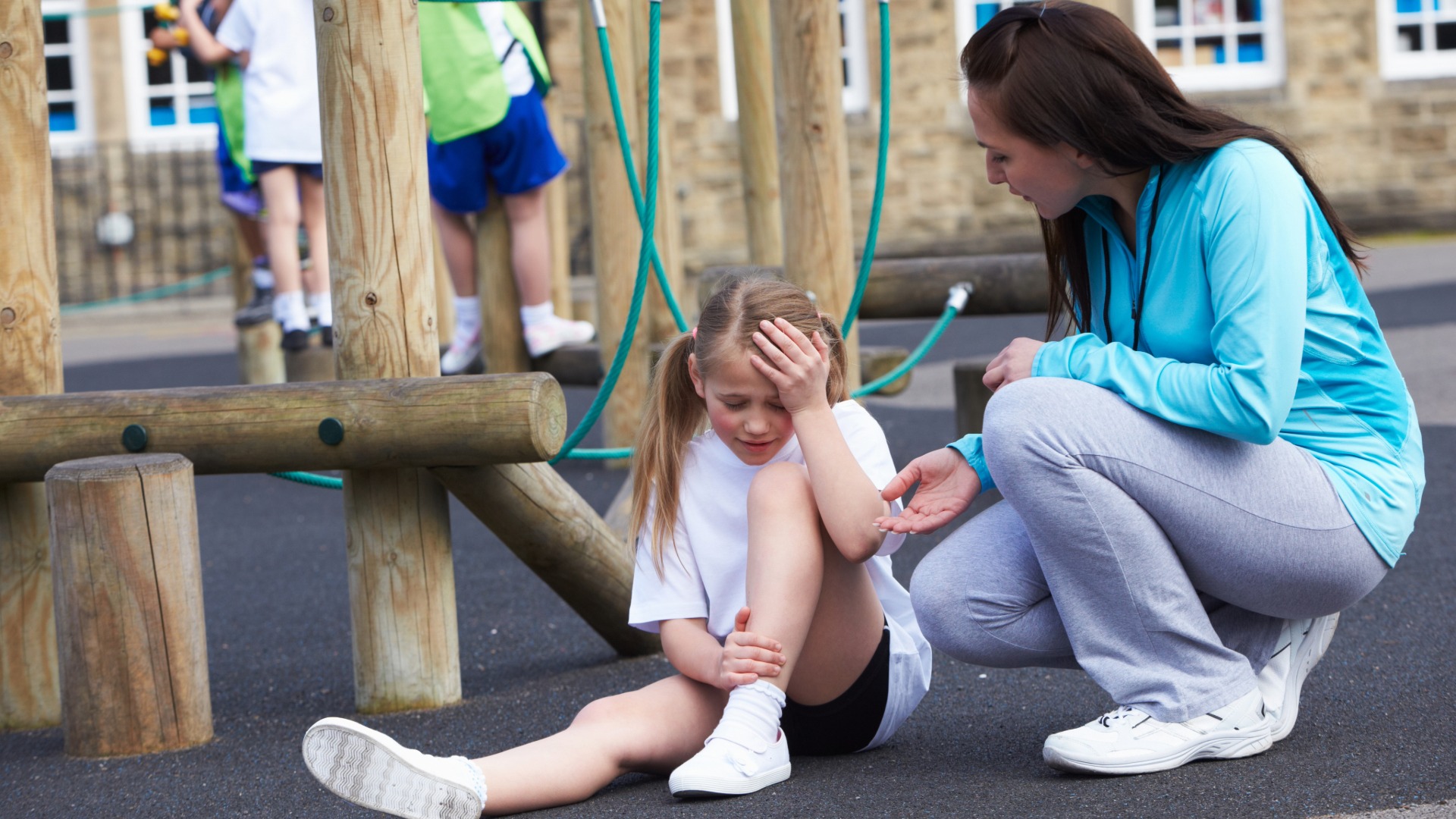
Getting a call that your child was hurt at school is always unsettling. While small bumps and scrapes are simply part of childhood, serious and preventable injuries should never be part of a child’s experience at school. When parents are faced with these situations, they are often unsure of what to do next.
If your child is hurt at school, it is also important to investigate what happened that led to the child’s injury. To that end, it is important to ask the school for a written incident report, find out how it is conducting its investigation (including whether another child involved has a history of this), and hold off on signing anything or pointing fingers until you’ve talked to a personal injury lawyer, who can assess whether the school board met its standard of care.
Below are a few concrete steps to be in the best position to advance a claim.
1. Ask for a written Incident Report
Request the school’s written incident report as soon as possible. It should record what happened, where, when, who was supervising, and who witnessed it.
Schools generally document accidents that happen on their premises. If the school doesn’t offer a report on its own, request one in writing. A record made close to the time of the incident is one of the clearest pieces of evidence available, since memories fade and accounts can shift over time, particularly once it becomes apparent that the school or school board might face liability.
2. Push for a full investigation
Ask the school directly what steps it is taking to find out:
- Was supervision adequate?
- Was equipment in disrepair?
- Had similar incidents happened before?
It’s natural to want answers immediately, but staying inquisitive rather than accusatory keeps the school cooperative.
3. If another child was involved, ask for relevant details
If another student caused the injury, find out whether it was an isolated incident or part of a repeated behavioural pattern that school employees ought to have prevented.
This matters in two ways:
- First, an unaddressed pattern can point to a failure of supervision or intervention by the school itself, not just a conflict between two kids.
- Second, separate from any legal claim, understanding whether there’s a broader issue matters for the safety of other children still at that school.
4. Understand a school board’s standard of care
Seeking a legal consultation can help you understand the standard of care applicable to schools in Ontario.
Schools and supervising staff must keep children reasonably safe while in their care. Whether a school is legally responsible for an injury generally depends on whether it failed to meet that standard.
Common failures include:
- inadequate supervision;
- poorly maintained equipment or facilities;
- understaffing;
- ignoring known risks.
Public schools add a layer of complexity because school boards are government bodies. Courts distinguish between broad, budget-driven policy decisions, which are generally immune from liability, and day-to-day operational decisions, such as whether there was adequate supervision on the playground on a given afternoon. These “operational” decisions are more likely to attract liability if something goes wrong. This distinction can be nuanced, which is why early legal advice matters, rather than assuming a claim against a public school is, or isn’t, possible.
5. Consider whether a regulatory complaint has a role
If staff conduct was involved, ask about internal processes through the school board or the teaching profession’s regulatory body. These processes won’t produce compensation, but they can produce accountability and will give you a sense of whether there was a finding of improper conduct. If there was, there may be a corresponding legal claim in civil court – though not always.
A regulatory or school board complaint runs separately from any civil claim. It won’t result in a settlement for your child. But raising a legitimate concern can lead to training, discipline, or policy changes that protect other children in the school community, not just your own. A lawyer can explain how these processes interact with, and differ from, a legal claim.
6. Know what the school can (and can’t) tell you
Schools must protect other students’ and staff members’ privacy, so they generally can’t share another child’s disciplinary history or a staff member’s personnel file with you. That limitation is expected and isn’t the same as being stonewalled.
What you should still expect: confirmation that your concern is being looked into, a general sense of what steps are underway, and updates as things progress. A school that goes silent, instead of communicating within its privacy obligations, is a different problem, and one worth raising directly.
7. Document everything
Keep your own written record alongside the school’s incident report.
- See a physician promptly and keep copies of medical reports
- Write down conversations with staff, including names and dates
- Note changes in your child’s behaviour, mood, or physical condition afterward
- Keep correspondence with the school in writing where possible
The incident report, relevant medical evidence, written communications, and proof of what the school knew and when, are generally needed to support a claim in negligence against a school or school board.
8. Talk to a lawyer before you go further
Speak with a personal injury lawyer before making accusations or signing anything the school provides. Claims involving children require a litigation guardian and court approval of any settlement, so this isn’t a do-it-yourself process.
A lawyer can tell you whether your child’s case looks strong, what deadlines apply, and what to expect. Claims involving minors involve procedural steps that differ from adult claims, and getting this wrong early can cost you options later.
Get in Touch
Thomson Rogers LLP offers free, no-obligation consultations for parents whose children have been seriously injured at school. Call 416-868-3100, toll-free at 1-888-223-0448, or book a free consultation online.

Chris Lazaris is a Personal Injury Lawyer and an Associate at Thomson Rogers LLP. He has been recognized in Best Lawyers: Ones to Watch in Canada since 2025 for his work in Personal Injury Litigation. Chris can be reached at 416-868-3214 or by email.
About Thomson Rogers LLP’s Personal Injury Group
Thomson Rogers LLP is a Toronto-based law firm with almost a century of experience representing plaintiffs in personal injury, medical malpractice and civil litigation matters across Ontario. The firm’s Personal Injury Group is recognized as a leading Ontario personal injury practice, known for standing with clients through the hardest moments of their lives.
Frequently Asked Questions
What’s the first thing to do if my child is hurt at school?
Get medical attention if needed, then request a written incident report from the school describing what happened and who was involved.
Can I sue a public school in Ontario?
Possibly. Public schools are government bodies, and courts treat broad policy decisions differently from day-to-day operational failures. A lawyer can assess which category applies to your situation.
Should I confront the school or the other child’s parents directly?
No. Ask questions rather than making accusations before speaking with a lawyer. A school that feels threatened tends to share less information.
Do I need a lawyer if the injury was minor?
Not necessarily. But if the injury is serious, involves a pattern of behaviour by another student, or suggests the school failed its duty of care, a free consultation costs nothing and clarifies your options.
Will a school board or regulatory complaint get my child compensation?
No. That process runs separately from a civil claim and focuses on accountability and future safety, not compensation. A lawyer can pursue both where appropriate.
Glossary of Terms
Incident report
A written record, created by the school, documenting what happened, where and when it happened, who was supervising, and who witnessed the event. This is typically the first piece of documentation a parent should request.
Investigation
The steps a school takes after an incident to determine how it happened and whether it could have been prevented, for example, reviewing whether supervision was adequate or whether equipment was in disrepair.
Litigation guardian
A person, usually a parent, appointed to act on a child’s behalf in a legal proceeding, since children cannot bring a claim on their own. Courts must also approve any settlement reached on a child’s behalf to make sure it’s in the child’s best interests.
Negligence
A failure to meet a required standard of care that results in harm. In the school context, this could include inadequate supervision, poor maintenance of equipment or facilities, understaffing, or failing to act on a known risk.
Operational decision
A day-to-day decision made by staff carrying out their duties, such as how closely a playground is supervised on a given afternoon. Operational decisions are more likely to attract liability than broad policy decisions if something goes wrong.
Policy decision
A broad, budget-driven decision made at a higher administrative level, such as how a school board allocates resources across its schools. Courts generally give governments more flexibility here, meaning these decisions are less likely to result in liability than operational ones.
Regulatory complaint
A complaint made to a professional regulatory body, such as a teachers’ college, about a staff member’s conduct. This process is separate from a civil claim and can’t result in compensation, but it can lead to accountability or discipline.
School board
The government body responsible for operating public schools within a given area. Because school boards are government entities, claims against them can involve additional legal considerations compared to claims against private schools.
Standard of care
The legal obligation a school and its staff have to take reasonable steps to keep children safe while they’re in the school’s care. Whether a school can be held responsible for an injury usually comes down to whether this standard was met.
Share this


Related articles:



Stay Informed
Subscribe to receive updates on the latest news from Thomson Rogers LLP as well as invitations to seminars, webinars and more.